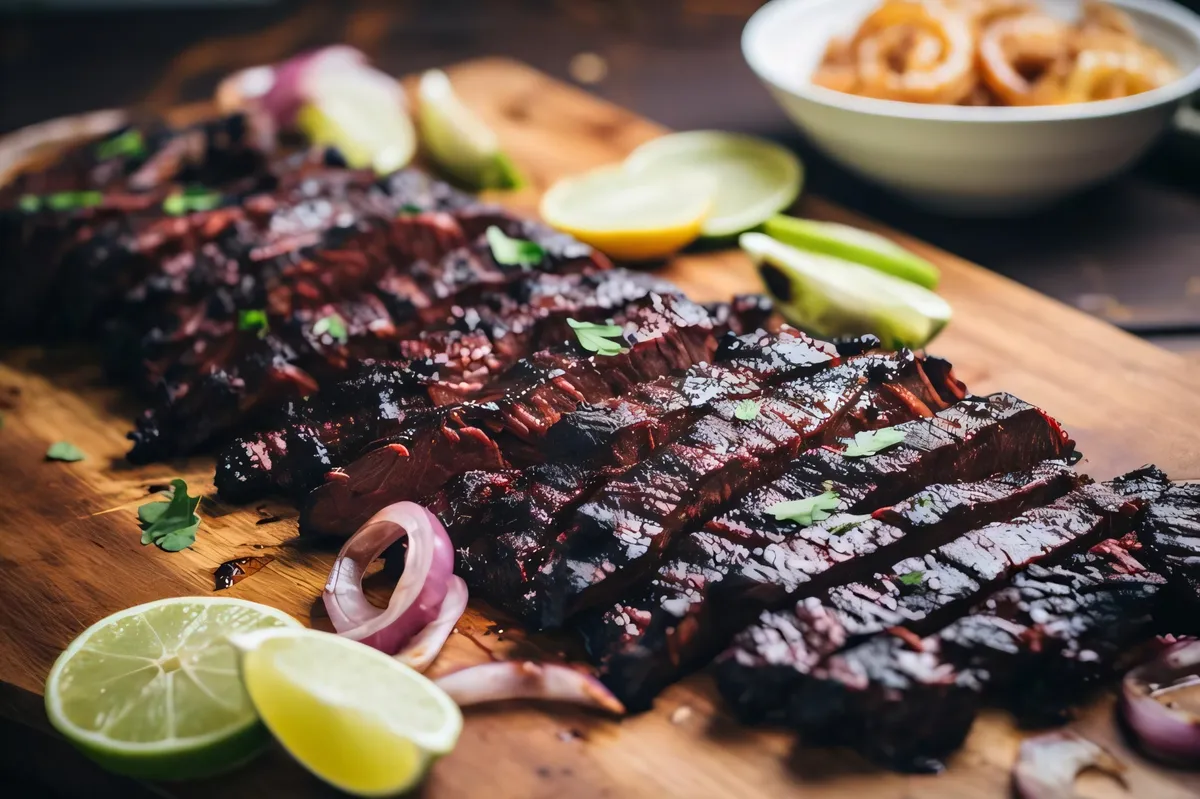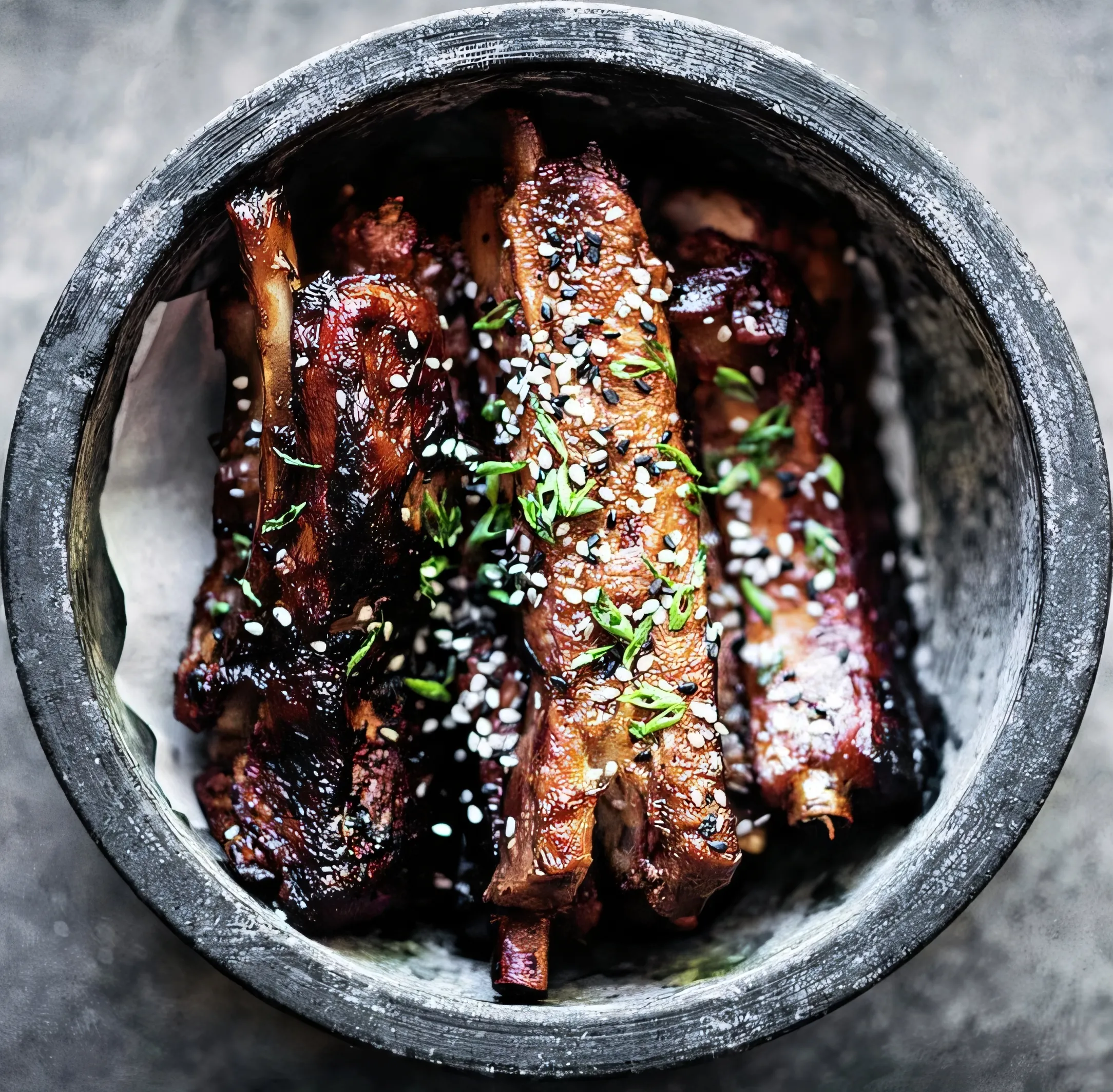
Spicy Pork Belly Yakiniku
Korean-Japanese fusion — thin-sliced pork belly in a gochujang-miso marinade with dual-chili heat, grated pear tenderizer, and charcoal-grilled edges that caramelize without burning.
Pork
Marinade
Finishing & Serving
Overview
This recipe sits at the intersection of Japanese yakiniku tare and Korean dwaeji bulgogi — the sweet-spicy-savory trifecta that neither tradition delivers alone. The marinade uses dual-chili layering (gochujang for fermented depth, gochugaru for clean fruity heat), white miso to bridge the Japanese-Korean divide, and grated Asian pear as an enzymatic tenderizer. The research drew from Korean Bapsang’s top-rated jeyuk bokkeum, Maangchi’s dwaeji bulgogi, Just One Cookbook’s yakiniku methodology, and the Osaka/Tsuruhashi yakiniku corridor where these flavors have cross-pollinated for 80 years.
Steps
1. Slice the pork belly
If starting from a whole slab, wrap it tightly in plastic and freeze for 1.5–2 hours until firm but not rock-solid — it should yield slightly under pressure. Using a sharp knife, slice ¼-inch thick against the grain into pieces roughly 3 inches long by 1.5 inches wide. Score each piece with shallow diagonal cuts on one side (kakushi-bocho) — this prevents curling and helps the marinade penetrate.
Alternatively, buy pre-sliced pork belly from an Asian grocery store — the commercial slicer produces perfectly uniform cuts.
2. Build the marinade
Combine gochujang, soy sauce, miso, mirin, brown sugar, gochugaru, minced garlic, grated ginger, grated pear, grated onion, sake, and black pepper in a bowl. Mix thoroughly. The marinade should be a thick, rough paste — not a thin liquid. Reserve about ¼ cup of the clean marinade in a separate container before adding the raw pork — this is your finishing sauce.
Add the sesame oil to the reserved portion only — it works better as a finishing drizzle than in the marinade, where its low smoke point causes it to turn acrid on a hot grill.
3. Marinate for 4 hours
Wearing gloves, work the marinade into every surface of the pork belly slices, pressing it into the score marks. Place in a zip-lock bag or covered container. Refrigerate for 4 hours minimum, up to 12 hours. The grated pear contains cysteine proteases that gently break down muscle fibers — much gentler than kiwi or pineapple, so the full 4-hour soak is safe without mushiness risk.
4. Set up the grill
Remove pork from the fridge 20 minutes before cooking. Set up a two-zone fire: bank all coals to one side (direct zone at ~450°F), leave the other side empty (indirect zone). This is non-negotiable for sugar-laden marinades — you need somewhere to move pieces that are caramelizing too fast.
5. Grill the pork
Shake off excess marinade from each piece and pat lightly with paper towels — pooled sugar means pooled burning. Place pieces on the direct heat zone with space between each piece. Do not crowd — overlapping pieces steam instead of sear.
Cook about 1.5 minutes on the first side (70% of the cook), watching for caramelized edges and juice beading on the surface. Flip once. Cook 30–45 seconds on the second side. Move any pieces that are darkening too fast to the indirect zone to finish gently. Total cook time is 2–3 minutes per batch.
6. Serve immediately
Transfer grilled pork directly to a platter — do not rest. Thin-sliced yakiniku is built to be eaten straight off the grill while hot. Drizzle with the reserved marinade (mixed with the sesame oil). Scatter with toasted sesame seeds, sliced scallions, and fresh chili.
Serve with steamed rice, butter lettuce wraps, and pickled vegetables. To eat ssam-style: lay a lettuce leaf flat, add rice, top with a piece of pork, add a dab of ssamjang or the reserved marinade, and wrap.
Notes
- On the dual-chili approach: Gochujang provides fermented depth and sweetness. Gochugaru adds a cleaner, smokier, fruitier heat. Using both is what separates expert-level recipes from basic ones — they hit different flavor and heat registers.
- On the miso: White miso bridges the Japanese-Korean divide. It adds a round, sweet umami that’s distinctly more yakiniku than pure Korean. Red miso works but is saltier — reduce soy sauce by 1 tsp if substituting.
- On the pear: Asian pear is the ideal enzymatic tenderizer — gentler than kiwi (which can turn thin slices mushy in 30 minutes) and adds natural sweetness. Fuji apple is the closest substitute.
- Don’t skip the score marks: The shallow diagonal cuts (kakushi-bocho) prevent curling on the grill, improve tenderness by severing muscle fibers, and create channels for the marinade to penetrate deeper into the meat.
- Sugar management: Gochujang already contains fermented rice sugars. Combined with brown sugar and mirin, the sugar load is substantial — this is why shaking off excess marinade and using two-zone heat matters. The caramelization window between “perfect char” and “burnt” is narrow.