Miso-Lacquered Flap Steak
Yakiniku-style beef seared in cast iron with a red miso marinade that seasons, tenderizes, and supercharges browning all at once.
The Cut
Marinade — Foundation
Marinade — Heat & Aromatics
Serving
Overview
This yakiniku-inspired dish uses red miso as a triple-threat marinade: it seasons with deep umami, tenderizes via koji-derived enzymes, and supercharges the Maillard reaction by providing the free amino acids and sugars that plain beef lacks. The lacquering technique — reserving marinade and brushing it on mid-sear — builds a complex, caramelized crust in layers that a single application can’t achieve.
Steps
1. Build the marinade
Whisk together the miso, mirin, sake, sugar, soy sauce, gochujang, sesame oil, grated garlic, and grated ginger into a smooth paste. Set aside one quarter of the finished paste in a separate small bowl — this is your lacquering reserve. Do not skip this step.
2. Slice and marinate the meat
Freeze the flap steak for 20-25 minutes until firm but not solid. Cut against the grain into pieces roughly 4mm thick and 4-5 inches long. The partial freeze makes clean, thin slicing dramatically easier.
Toss the slices in the larger portion of marinade, coating every piece. Marinate 30-60 minutes at room temperature. Do not exceed 2 hours — miso’s koji-derived proteases will turn thin slices mushy past that window.
3. Blot the excess
Before cooking, wipe excess miso off each piece with paper towels. You want a thin residual film, not a thick coating. Thick miso scorches and turns bitter before the meat finishes cooking. This is the single most repeated tip across every professional source on miso-glazed meat.
4. Heat the pan
Get a cast iron skillet or griddle ripping hot over medium-high heat — 400-450°F surface temperature. Apply a light wipe of neutral oil. Work in batches with pieces in a single layer. Do not crowd the pan.
5. Sear and lacquer
Lay pieces flat on the hot surface. Cook 80% on the first side — about 45-60 seconds — until you see good color and juices bubbling up through the surface.
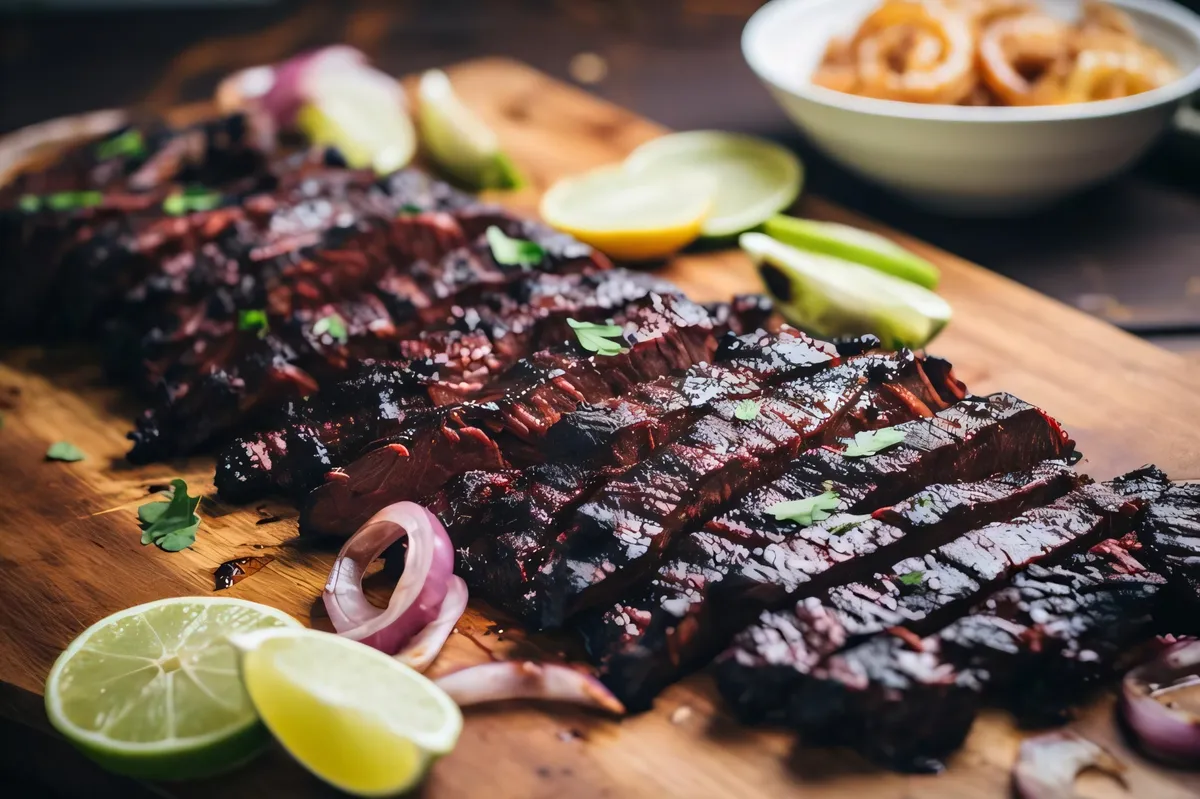
Flip. Immediately brush the seared top with reserved marinade using a silicone brush — a thin layer only. Cook the second side for 15-20 seconds. The reserved marinade caramelizes on the already-seared surface, building a layered, lacquered crust.
6. Serve immediately
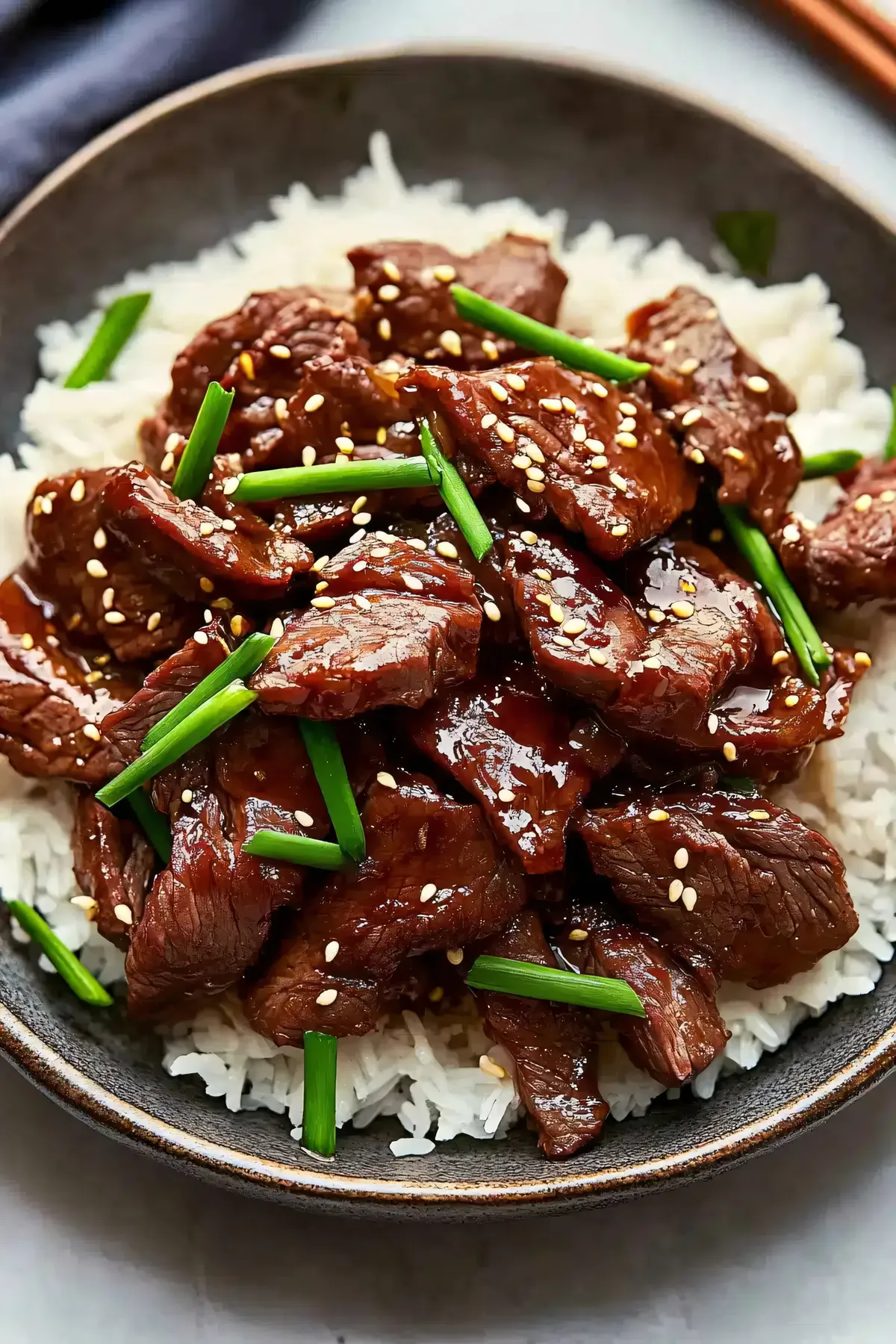
Pull at medium — well-charred outside, faint pink center. Serve over short grain rice with sliced scallions, toasted sesame seeds, and shredded cabbage with a squeeze of lemon (the classic yakiniku palate cleanser).
Notes
- Why flap steak: Its coarse, open grain absorbs miso the same way true harami (outside skirt) does. Often sold as “sirloin tips” or “steak tips” at Costco. Hanger steak is the closest flavor match if you can find it.
- The lacquering technique: Reserving marinade and brushing it on mid-sear layers caramelization in stages, building the complex crust that a single pre-grill application can’t achieve.
- Gochujang is adjustable: If you want a cleaner, purely miso-forward flavor without heat, reduce to 1 tsp or omit entirely. It adds fermented chili depth but isn’t traditional to all yakiniku preparations.
- Thicker cuts: For full-thickness steaks (1 inch), marinate 2-4 hours refrigerated. Cold slows enzyme activity and prevents mushiness. Overnight (up to 24 hours) is acceptable for full-thickness cuts.
- Optional dipping tare: Thin the reserved marinade with a splash of rice vinegar for a dipping sauce on the side.