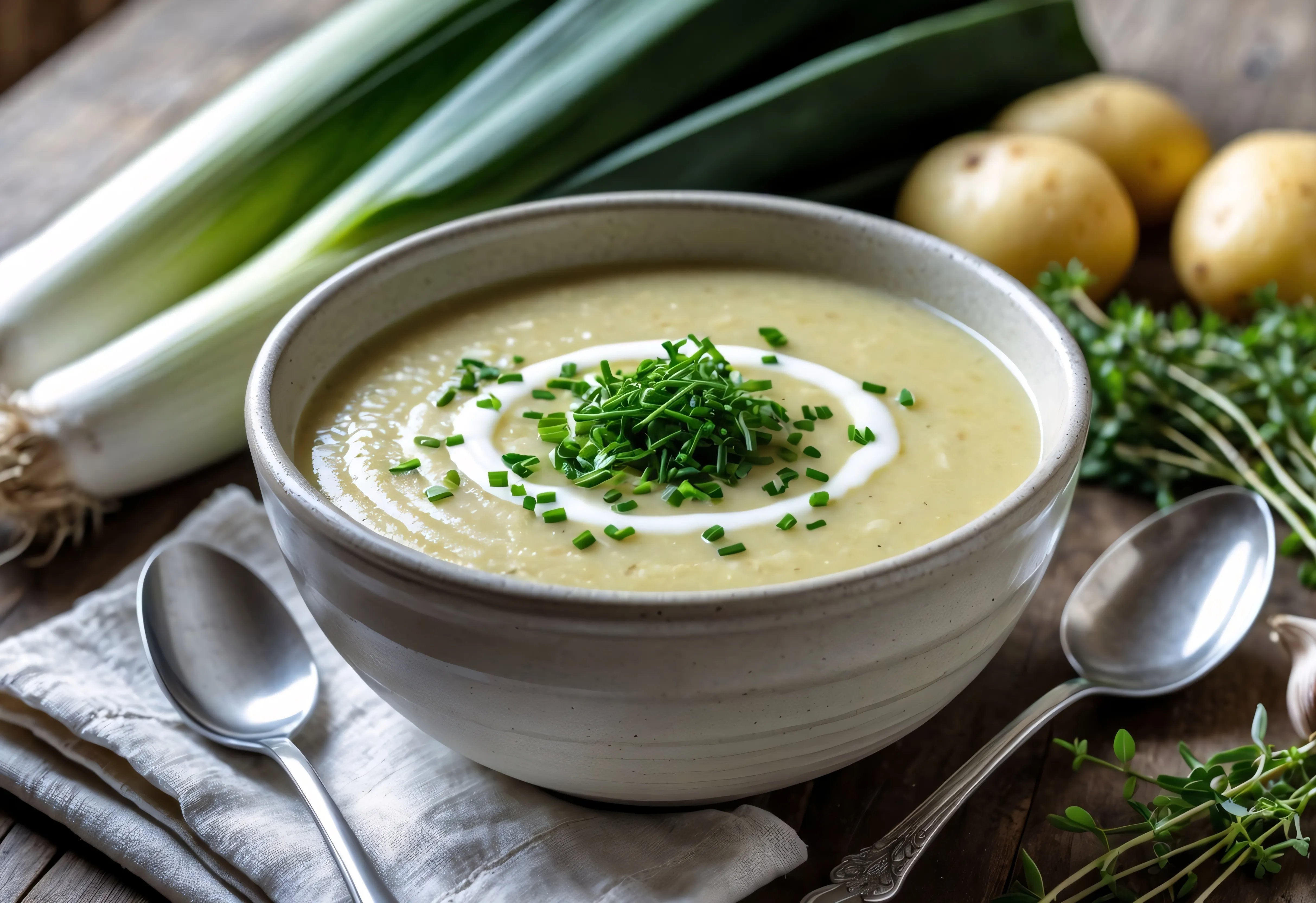
Potato Leek Soup
Potage Parmentier — patient leek sweat in butter, Yukon Golds simmered in leek-top broth, blended with restraint, finished with buttermilk and nutmeg for a tang that cream alone can't provide.
Leek-Top Broth
Aromatics
Body
Finishing
Garnish
Overview
Potage Parmentier — the first recipe in Julia Child’s Mastering the Art of French Cooking and one of the most deceptively simple dishes in the French canon. This version synthesizes 10+ authoritative sources spanning Escoffier through Lopez-Alt: ATK’s leek-top broth method extracts maximum flavor from parts you’d normally discard, the classical low-and-slow leek sweat builds the aromatic base, and Lopez-Alt’s buttermilk-nutmeg finish adds a cultured tang that prevents the soup from reading as one-note. Naturally gluten-free — no flour, no roux, the potato starch provides all the body.
Steps
1. Build the leek-top broth
Combine the dark green leek tops, chicken broth, water, bay leaf, and thyme sprigs in a saucepan. Bring to a simmer, cover, and cook 20 minutes. Strain through a fine-mesh strainer, pressing on solids to extract maximum flavor. Discard greens and aromatics. Hold broth warm — you should have about 5–6 cups. This is ATK’s technique: extracting flavor from parts you’d normally throw away.
2. Sweat the leeks — low and slow, no color
Melt 4 tbsp butter in the Dutch oven over medium-low heat. Add the sliced white and light green leeks and 1 tsp salt. Stir to coat in butter, then reduce heat to low. Cook 12–15 minutes, stirring occasionally, until the leeks are completely soft and translucent but have taken on no color whatsoever. The salt draws out moisture and concentrates sweetness — this step is where the flavor is built. If you see any browning, drop the heat further.
3. Add potatoes and broth
Add the potato pieces and the strained leek-top broth. Bring to a gentle simmer — bubbles breaking the surface lazily, not a rolling boil. Cover with the lid slightly cracked and cook 20–25 minutes until potatoes are completely tender and falling apart when prodded with a spoon.
4. Blend with restraint
Remove from heat. Add the 2 tbsp cold cubed butter directly to the pot — the fat coats starch molecules and reduces glueyness during blending. Using the immersion blender, blend in short pulses, moving through the pot. Stop the moment the soup is smooth. Do not blend for insurance — every extra second releases more starch and pushes the texture toward glue. For some texture, reserve a cup of potato chunks before blending and stir them back in after.
5. Finish and season
Return to low heat. Stir in the heavy cream and buttermilk — the buttermilk adds a tang that prevents the soup from reading as one-note. Warm gently without boiling. Add nutmeg and white pepper. Taste and add salt assertively — potatoes absorb enormous amounts of seasoning and the soup will need more than you expect. Squeeze in 1–2 tsp lemon juice and stir — this brightens the entire pot. Taste again and adjust.
6. Serve
Ladle into warmed bowls. Top with snipped chives and a swirl of creme fraiche or olive oil if you like.
Notes
- The leek sweat is everything. Every professional source agrees: rushing this step is the #1 mistake home cooks make. 12–15 minutes minimum, low heat, no browning. The leeks should look melted, not seared.
- Better the next day. The soup thickens overnight as potato starch retrogrades. Thin with a splash of broth or water when reheating over low heat. Flavor compounds continue integrating.
- The lemon juice is not optional. Almost no classical source mentions acid, but modern authorities converge: a small amount of lemon juice transforms the soup from pleasant to compelling.
- Buttermilk is the move. Lopez-Alt’s innovation. It adds a cultured tang that gives the soup a second dimension cream alone can’t provide. If you don’t have buttermilk, a few tablespoons of creme fraiche stirred in at the end gets you partway there.
- Gluey texture insurance. Yukon Golds have lower starch than Russets, which helps. Adding butter before blending helps. Short immersion blender pulses help. If it still goes gluey, stir in cold cream or milk and thin with broth.
- Freezing. Freezes well for 3–6 months but freeze before adding the cream and buttermilk. Add dairy fresh after thawing.
- Naturally gluten-free. No flour, no roux. Verify your chicken broth is GF.