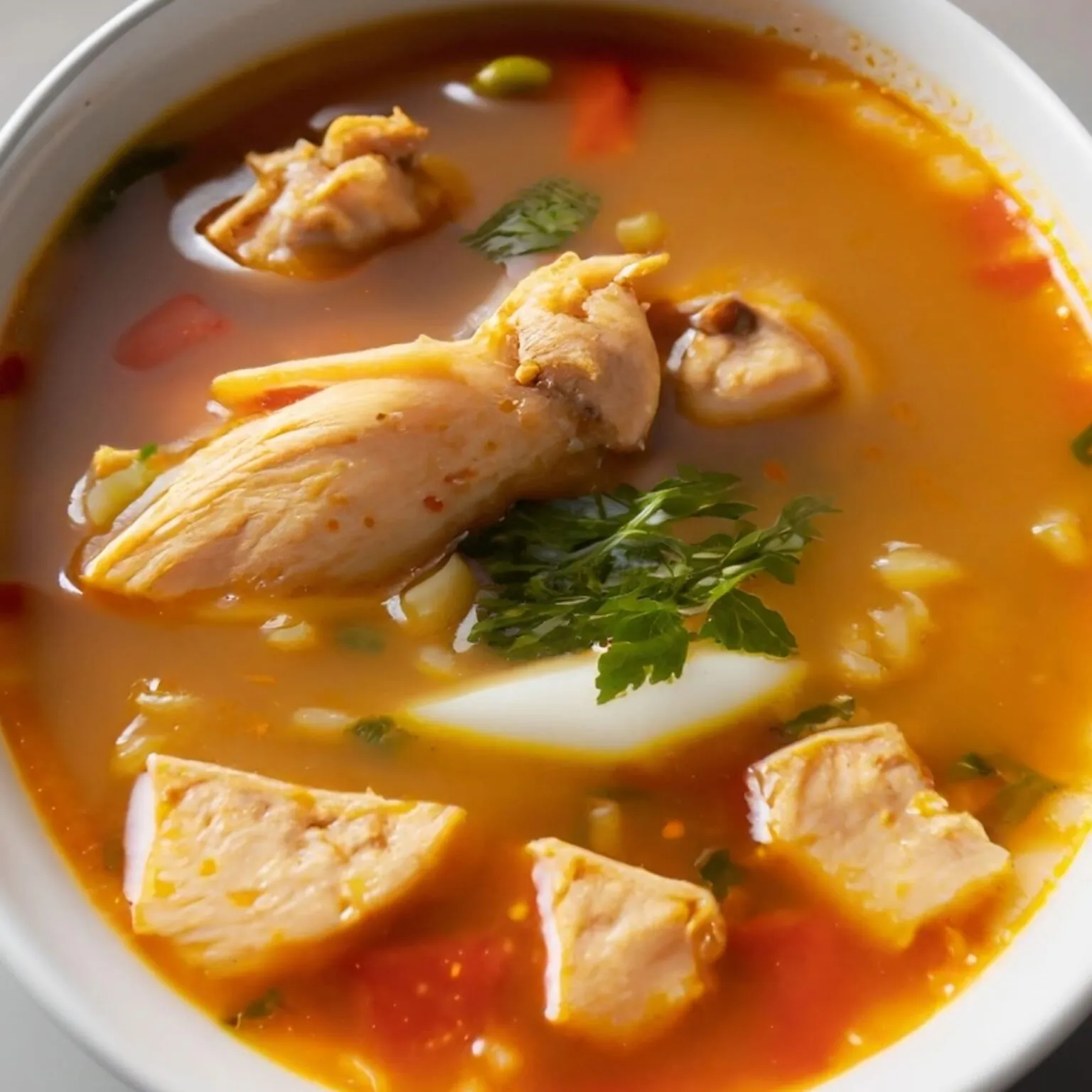
Chang's Spicy Chicken Soup
A reconstruction of the beloved P.F. Chang's dish discontinued in 2020 — ginger-chili broth, cornstarch-velveted chicken, shiitake mushrooms, pin rice noodles, and fresh grape tomatoes stirred in off-heat.
Broth
Chicken
Vegetables & Noodles
Garnish
Overview
This recipe reconstructs P.F. Chang’s Spicy Chicken Noodle Soup, discontinued in March 2020 and still mourned by over 500 petition signers. It was synthesized from eight independent copycat recipes, corrections from two former P.F. Chang’s employees, official P.F. Chang’s content, and nutritional data. The key insight: this is not a hot and sour soup — it’s a ginger-chili-citrus broth with Southeast Asian brightness, closer to tom yum than anything Sichuan. The three pillars that define it are pin rice noodles, cornstarch-velveted chicken, and grape tomatoes added off-heat.
Steps
1. Build the aromatic broth
Combine chicken stock, soy sauce, chili garlic paste, white vinegar, sugar, and sliced ginger in a wok or large pot. Bring to a simmer and hold at a gentle bubble for 15 minutes to extract the ginger flavor. Do not let it reach a rolling boil — you want a clear broth, not a cloudy one. P.F. Chang’s confirmed this soup was built in a wok, which may add subtle wok hei character.
2. Velvet the chicken
While the broth simmers, toss the thin chicken strips in cornstarch until every surface is completely coated. This simplified Chinese velveting creates a silky coating on each piece and contributes subtle body to the broth as starch releases during cooking. No egg white needed — dry cornstarch alone does the work here.
3. Poach the chicken and mushrooms
Add the cornstarch-coated chicken strips and sliced shiitake mushrooms directly into the simmering broth. Maintain a gentle simmer — do not boil. Boiling toughens the chicken and clouds the broth. Cook for 15 minutes until the chicken is cooked through and silky-textured.
4. Cook the noodles separately
While the chicken poaches, cook the pin rice noodles in a separate pot according to package directions. Cooking noodles separately is essential — if added directly to the soup, they absorb all the liquid and become mushy. Use fresh or frozen noodles, not dried, which overwhelm the broth.
5. Finish with tomatoes off-heat
Remove the soup from heat. Stir in the halved grape tomatoes and sliced scallions. The residual heat warms them through while preserving their fresh texture and bright color. Fish out the ginger coins if you prefer.
6. Assemble and serve
Divide the cooked noodles among bowls. Ladle the soup over the noodles, making sure each bowl gets chicken, mushrooms, and tomatoes. Garnish with fresh cilantro, a drizzle of Sriracha, and serve with lime wedges on the side. Let stand 2–3 minutes before eating.
Notes
- Pin rice noodles: Also called silver pin noodles, loh see fun, or bee tai bak. Short, white, semi-transparent rice noodles with tapered ends — found frozen at Asian grocery stores. If unavailable, substitute thin rice vermicelli broken into short lengths, though the texture won’t be identical.
- Heat level: 1.5 tbsp sambal oelek gives moderate heat. Scale up to 2–3 tbsp if you want it properly spicy. The original restaurant version was notably hot.
- The acid debate: Former employees disagree on whether the original used lime juice or white vinegar. This recipe follows the employee correction toward white vinegar. If you prefer brighter citrus notes, substitute 2 tbsp fresh lime juice plus 1 tsp lime zest.
- Sodium warning: The original clocked in at 3,310mg sodium per bowl. This recipe is intentionally salty to match — reduce soy sauce to 3 tbsp for a lighter version.
- Leftovers: Store broth and noodles separately. Noodles absorb liquid overnight and turn to mush if stored together.