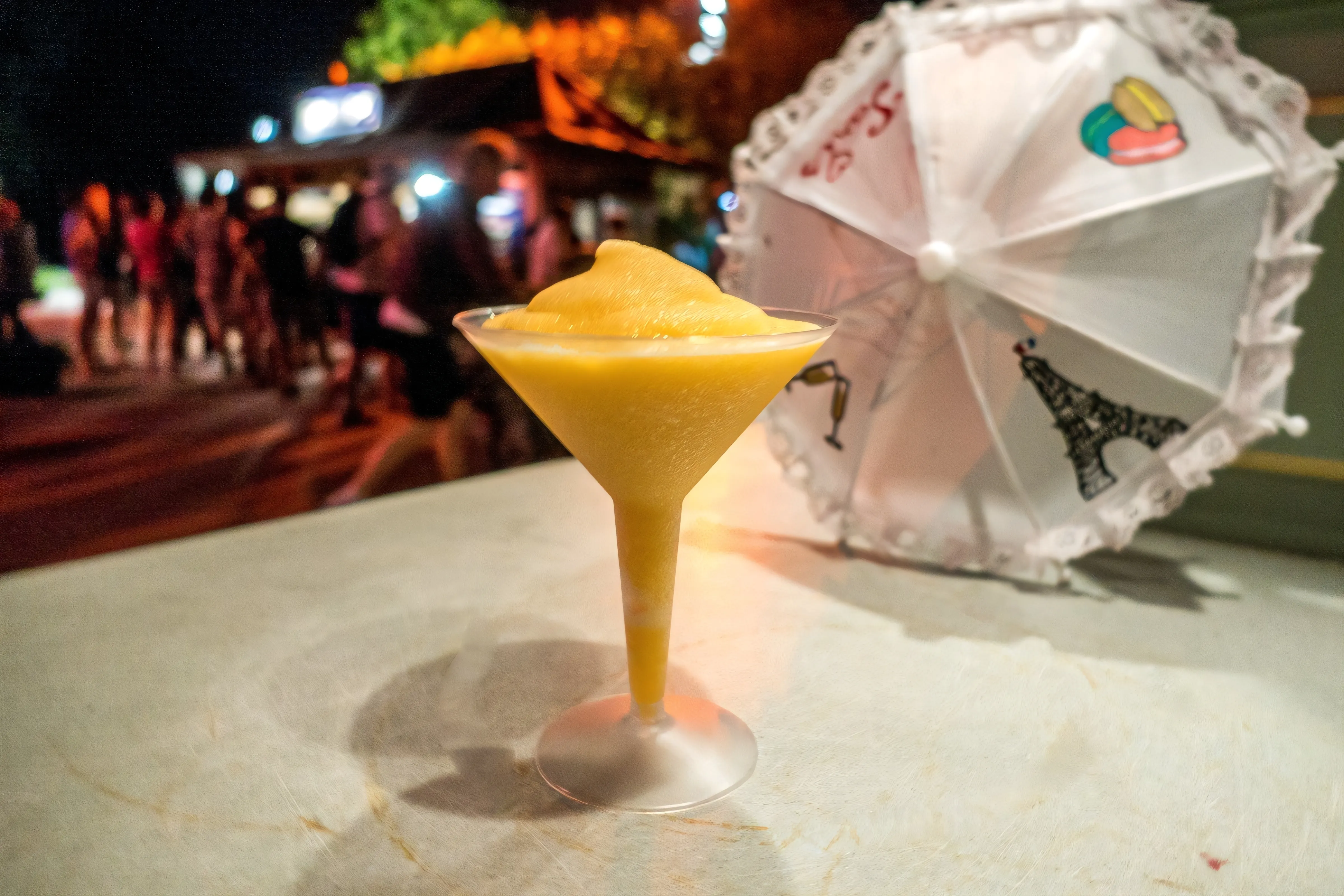
Butterbeer (Frozen)
The frozen variant — same cream soda and butterscotch syrup base churned in an ice cream maker into slushy soft-serve texture, topped with marshmallow-creme foam that holds even longer over the cold base.
Homemade Butterscotch Syrup (makes ~1¼ cups for ~10 servings)
Foam (per 4 servings)
Frozen Base (yields ~4 cups, serves 4)
Overview
The frozen variant of Butterbeer is what most park visitors actually order at Universal Orlando in summer — a slushy, soft-serve texture base with the same butterscotch character and marshmallow-creme foam. The sugar content of the base (~18–22 °Brix) keeps ice crystals small, producing a smooth scoopable texture rather than a hard freeze. The frozen base also slows foam melt — the sip window stretches from 8 minutes (cold) to 15 minutes (frozen). Make the butterscotch syrup and foam ahead, then churn the base just before serving.
Steps
1. Make the butterscotch syrup
In a small saucepan over medium heat, melt the butter. Add the dark brown sugar and salt. Cook 3–5 minutes, stirring, until smooth and bubbling — the sugar dissolves and the mixture darkens slightly as the sugars begin to caramelize.
Whisk in the heavy cream off heat (it will bubble violently — that’s normal). Return to medium-low and cook to 225°F on a candy thermometer, stirring occasionally. Remove from heat and stir in the vanilla. Cool to lukewarm before using.
2. Soften the marshmallow base
Whisk the hot water into the marshmallow creme until completely smooth. Freeze for 20–25 minutes to chill — this is critical for the foam to whip properly.
3. Whip the foam
Add the Dream Whip powder, powdered sugar, and salt to the chilled marshmallow base. Whip with a hand mixer for 60–90 seconds until soft peaks form. Fold in the butterscotch syrup, butter extract, caramel extract, and vanilla. Refrigerate until needed.
4. Build the frozen base
In a large bowl, whisk together the cream soda, ½ cup butterscotch syrup, salt, vanilla, butter extract, and caramel extract. Whisk until the syrup is fully dissolved into the soda.
5. Churn
Best method — ice cream maker: Pour the base into a pre-frozen Cuisinart-style canister. Churn 20–25 minutes until slushy. Aim for soft-serve thick, not solid.
Excellent — Ninja Slushi: Pour the base into the machine, run the Slush cycle for 25–30 minutes.
Good — stir-freeze method: Pour the base into a metal pan. Freeze 30 minutes, then stir vigorously with a fork to break crystals. Repeat every 30 minutes for 2–3 hours.
Acceptable — blender shortcut: Freeze 12 oz of cream soda in ice cube trays overnight. Blend the frozen cubes with the remaining 12 oz of cream soda plus the butterscotch syrup and extracts until slushy. Add 1 tbsp powdered sugar if texture is too icy.
6. Serve
Scoop the frozen base into chilled mugs (or souvenir steins). Crown each with a generous dollop of foam. Serve immediately — frozen Butterbeer’s sip window extends to about 15 minutes as the cold base slows foam melt.
Notes
- Brix target: 18–22. The dissolved sugar (from cream soda + butterscotch syrup) keeps ice crystals small. Below 14 Brix it’ll freeze solid; above 25 it won’t freeze enough to hold form. If you’re using a less-sweet cream soda or club-soda base, add 1–2 tbsp simple syrup.
- The freezer concentrates perceived sweetness. Back off butterscotch syrup by ~15% relative to the cold version if you find the cold version already at your sweet-spot.
- Don’t add plain water-ice to fresh base. It dilutes flavor and produces grainy texture. Pre-freeze the cream soda itself in ice cube trays if you need to.
- Storage: Frozen base holds in the freezer up to a week. Re-blend or re-churn briefly before serving to restore slush texture.
- Why blender-with-ice is graded “acceptable”: Side-by-side tastings consistently rank churn methods above blender methods — the texture is noticeably less grainy when ice crystals form gradually in a churn rather than smashed by blades.